
260GT Oceanographic Research Vessel | SSF Marine Survey Boat
Taiwan's first civilian ocean research vessel. 260-ton FRP oceanographic working boat with ROV, multi-beam sonar, and precision positioning for marine surveys and research.
260GT FPR Oceanographic Working Boat
260 GT
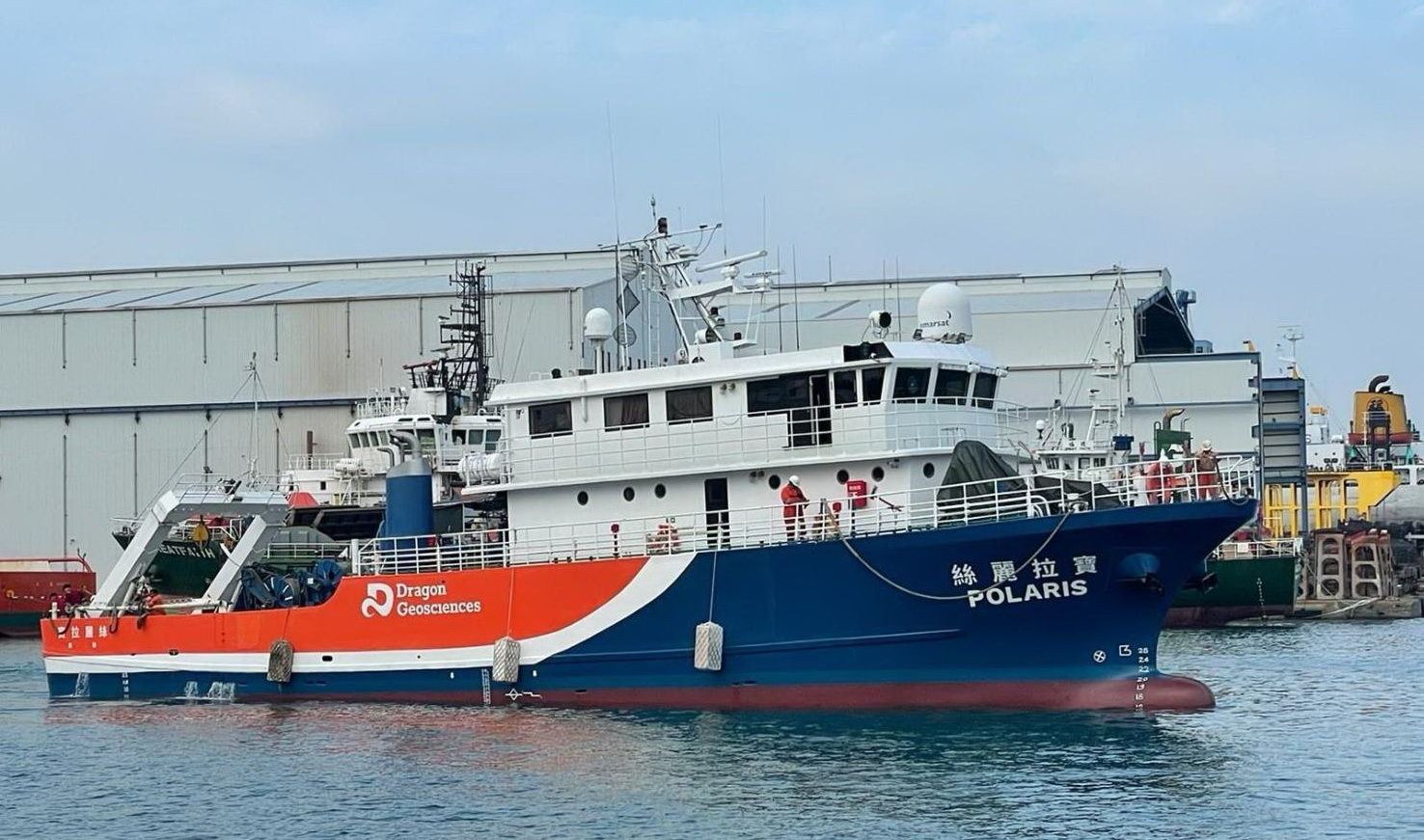
Polaris: Taiwan's First Civilian Ocean Research Vessel
The Polaris is Taiwan's first civilian ocean research vessel, designed for marine exploration, search-and-rescue missions, and academic research. Developed through collaboration between the National Kaohsiung University of Science and Technology and Quan Ri Instrument Company, the 260-ton ship showcases cutting-edge technology and functionality. Built by Shing Sheng Fa boat building Company, Polaris entered service in 2009 and is stationed at the Cijin campus pier. With extensive experience, Polaris has participated in numerous underwater search and exploration missions, marking a milestone in Taiwan’s marine research capabilities.
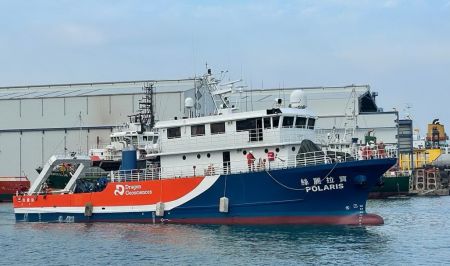
Specifications and Design:
Gross Tonnage: 260 tons
Length: 36.98 meters
Width: 6.80 meters
Cruising Speed: 11 knots
Base Location: Cijin Campus Pier
Built by Shing Sheng Fa Shipbuilding, the vessel combines exceptional structural strength with stability, meeting the demands of high-performance, reliable operation.
Expertise and Use Cases:
Versatile Applications: Suitable for marine surveys, sediment analysis, and underwater mapping. Also equipped for search-and-rescue missions and scientific exploration.
Proven Track Record: Extensive experience in marine science research and search operations, trusted for reliability and precision.
Key Instruments and Equipment
Remotely Operated Vehicle (ROV): Enables remote deep-sea observation and sample collection.
Differential Satellite Positioning Systems:
Applanix POS MV 320 DGPS
Thales Z-Max.com DGPS
Ensures precision positioning for efficient mission execution.
Single and Multi-Beam Echo Sounders:
Kongsberg EA 400 (38/200kc)
Simrad EK 60 (38/120/200Kc)
Kongsberg EM 302, EM710
For underwater topography mapping and depth data collection.
Side-Scan Sonar:
EdgeTech 4200FS
Produces high-resolution images of the seafloor, ideal for seabed mapping.
Sub-Bottom Profilers:
Kongsberg TOPAS PS40 SBP
EdgeTech 3200XS
Analyze sediment layers and geological structures.
Marine Magnetometer:
SeaSPY Marine Magnetometer
Detects magnetic anomalies, useful for metal objects or geological features.
Underwater Positioning System:
Kongsberg Hipap 350p
High-accuracy positioning for ROVs and other systems.
Core Sampling and Penetration Testing:
Drop Corer
Neptune 3000
Collects sediment cores and performs soil mechanics analysis.
Advantages of Polaris:
Advanced Technology: Equipped with state-of-the-art ocean exploration instruments for accurate data acquisition.
Versatile Functionality: Suitable for academic research and practical applications, meeting diverse exploration needs.
Robust Stability: Designed to withstand challenging sea conditions for reliable operations.
Eco-Friendly Approach: Aligns with Shing Sheng Fa's commitment to sustainability, incorporating energy-efficient systems to minimize environmental impact.
Principal Dimension
| Material | Fibre glass |
| Class | BV I + Hull, Mach, Special Servile, Unrestricted Navigation |
| Length | Over all 36.60 M |
| Lenth of Ship | 32.60 M |
| Breadth of Vessel | 6.80 M |
| Depth of Vessel | 3.00 M |
| Draft of Vessel | 1.90 M |
| Fuel Oil Cap. | 40 M^3 |
| Fresh Water Cap. | 20 M^3 |
| Main Engine Power | 1000 HP |
| Aux. Engine Power | 601KW + (99 KW x 2) |
| Speed | 11 Kts |
| Complement | 19 P |
-
260GT FRP Ocean exploration ship (1)
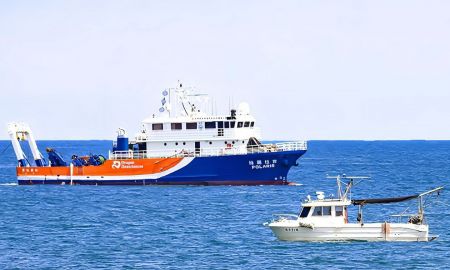 260GT FRP Ocean exploration ship (2)
- Photo Gallery
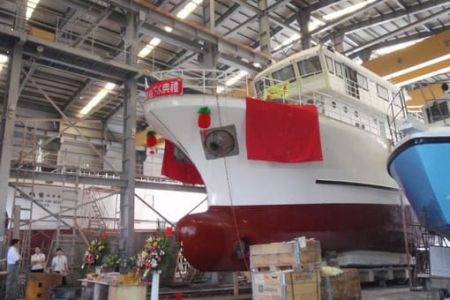 260GT FRP Ocean exploration ship Launch Ceremony
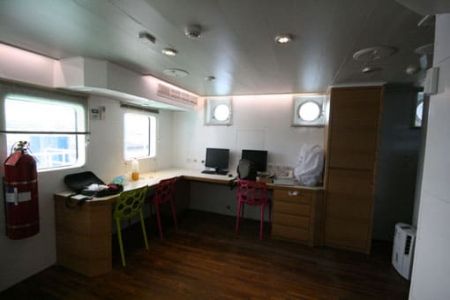 260GT FRP Ocean exploration ship Study Room
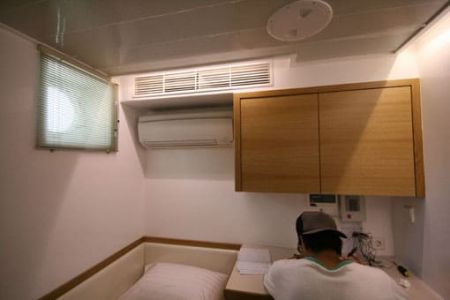 260GT FRP Ocean exploration ship Researcher Cabin
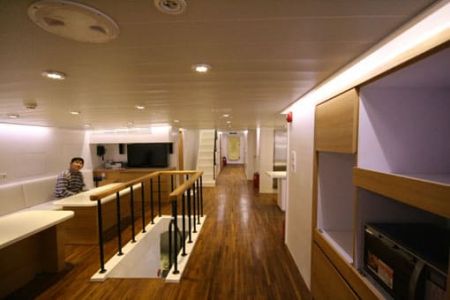 260GT FRP Ocean exploration ship Saloon
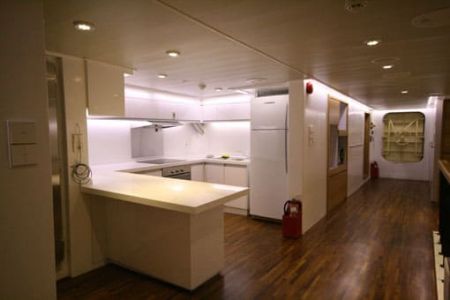 260GT FRP Ocean exploration ship Technician Workspace
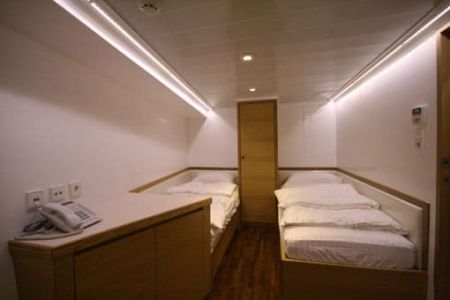 260GT FRP Ocean exploration ship Crew room
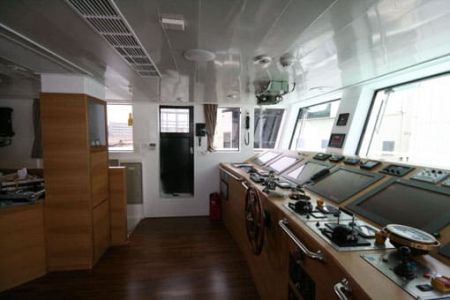 260GT FRP Ocean exploration ship Cab(1)
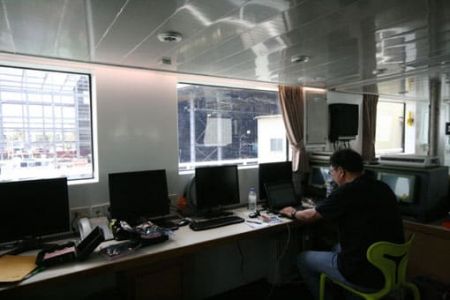 260GT FRP Ocean exploration ship Cab(2)
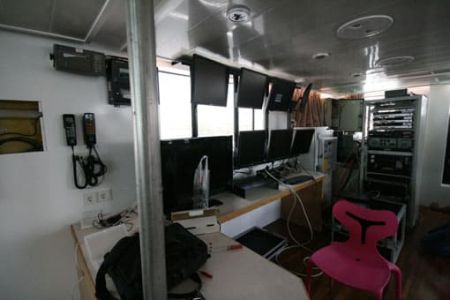 260GT FRP Ocean exploration ship System control room
 Download
 Best-Selling
Tags
How can you conduct comprehensive underwater surveys and sediment analysis with precision positioning and high-resolution seafloor imaging?
The Polaris oceanographic vessel integrates Kongsberg EM 302/EM710 multi-beam echo sounders, EdgeTech side-scan sonar, sub-bottom profilers, and Applanix/Kongsberg precision positioning systems to deliver accurate underwater topography mapping, sediment core collection, and geological structure analysis. This integrated approach enables marine research institutions to conduct rigorous scientific exploration missions with data quality and operational reliability proven through extensive research deployments since 2009. Contact SSF today to discuss how this vessel platform can support your institution's oceanographic research objectives.
Since entering service in 2009, Polaris has demonstrated proven reliability across extensive marine science research, underwater search operations, and exploration missions, establishing itself as a trusted platform for academic institutions and governmental maritime agencies. The vessel's versatile design accommodates marine surveys, sediment characterization, search-and-rescue operations, and geological exploration, while its robust stability and energy-efficient systems ensure reliable operation in challenging sea conditions with minimal environmental impact. With a cruising speed of 11 knots, capacity for 19 personnel, and comprehensive on-board systems including 1000 HP main engine and auxiliary power, the Polaris represents the pinnacle of civilian oceanographic vessel capability, offering research organizations and maritime authorities a proven solution for complex deep-sea exploration and scientific discovery missions.